Monday, 19 November 2012

Task 3

1. we had the image of the shoe and selected an area for distortion by using the pen tool.

2. we right clicked and Selected the our Selection outline, the went into the select tool bar and "Save selection".

3. we changed the Hue and Saturation to change the colour of the Selected part of the shoe.

4. After that we Merged the existing layer and crated a new layer for the background.

5. changed the colour of the background.

6. we Held alt and dragged a Duplicated version of the original image 3 times.

7. we used the Hue and Saturation to Distort the colours of each of the images.

8. after we Re merged the Image again for the Final Piece.


I like how successful the final image has turned out. And even though the original image is the bottom left I much prefer the bottom right image. I prefer this image because the colours are Bright and noticeable and it's colours has a near trance to it.


Alexander Rodchenko

Alexander Rodchenko was a Russian Constructivist Artist whom was also one of the founders of the art movement back in the early twentieth century. He was originally a graphic designer that later transformed into photography in which he was very successful with in his life.

Rodchenko Was born in St Petersburg but later moved to Kazan because of his fathers death in 1909. He later married in 1914 to Varvara Stepanova whom he met before in the "Kazan school of Art"

I came across this image in which influenced me to do the Constructivism work that is below the influence image:


My Final Constructivism Work  


Before I made it look better:


After I made it look better:


I love how I Made more of a communist effect with the second edit e.g. The Hammer and sickle, Stalin, the fist and The Communist star, also the Russian caption "Мы победим всех, кто стоит на нашем пути" translated into English says "We will conquer all who stand in our way" .

Monday, 12 November 2012

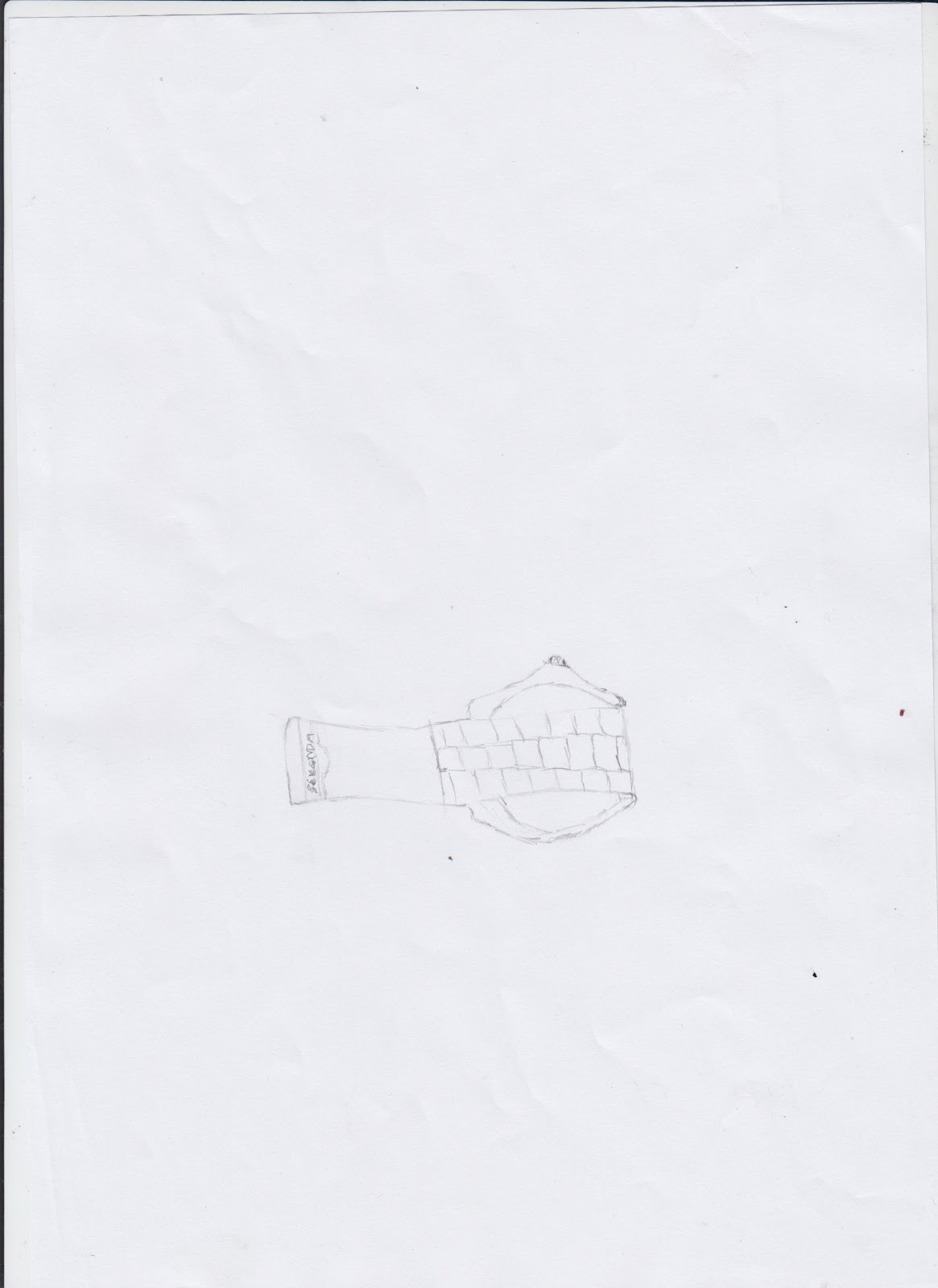
Colour and Grey Scale Watch

Watch 1 Drawing coloured:

I chose these colours because I saw How Well Blue and Orange Go together. My original idea involved the part within the glass ( the Aqua Green Bit ) to be a dark Orange. But as the production came along I discovered The Aqua Green and thought it would suit it more.
Watch 2 Drawing Grey Scale shaded:

 I feel the shading on My image Works Very well For what it's based on. as you can see in the Second image below this There is a huge improvement.


Drawn Example 1
Drawn Example 2
Drawn Example 3

Monday, 5 November 2012

Line Drawings

The strip:
"Piled Higher and Deeper" (PhD) is the comic strip about life (or the lack thereof) in academia.


Featured:
"Piled Higher and Deeper" the comic strip has appeared in The Stanford Daily, MIT, Carnegie Mellon University and Caltech newspapers among over 50 others.
The strip has appeared or been featured in the journal Nature, Science Magazine the Chronicle of Higher Education, IEEE Potentials magazine, Math Horizons magazine, Stanford Magazine and Canada's The Peer Review magazine among others, and has been linked to by USA Today's, The NY Times and The Washington Post's websites.

http://www.phdcomics.com/comics/archive.php?comicid=1342 

05/11/2012

In this comic strip the lines are consistent. The thickness of lines barely changes in each strip e.g. The Characters, Buildings, The tree, the grass and the food. The facial expression in the characters Can be Changed Dramatically by only changing a few lines in the strip, e.g. Strip 4 and 5 ' Male character's Facial Expression. 

Monday, 15 October 2012

Futurism and Constructivism

futurism started in the 20th century,the characteristics of this art movement are That it emphasized and glorified themes associated with contemporary concepts of the future, including speed, technology, youth and violence, and objects such as the car, the aeroplane and the industrial city. 

Futurist Artist


The founder of Futurism and its most influential personality was the Italian writer Filippo Tommaso Marinetti. Marinetti launched the movement in his Futurist Manifesto, which he published for the first time on 5 February 1909 in La gazzetta dell'Emilia, an article then reproduced in the French daily newspaper Le Figaro on 20 February 1909. He was soon joined by the painters Umberto Boccioni, Carlo Carrà, Giacomo Balla, Gino Severini and the composer Luigi Russolo.
Marinetti expressed a passionate loathing of everything old, especially political and artistic tradition. "We want no part of it, the past", he wrote, "we the young and strong Futurists!" The Futurists admired speed, technology, youth and violence, the car, the airplane and the industrial city, all that represented the technological triumph of humanity over nature, and they were passionate nationalists. They repudiated the cult of the past and all imitation, praised originality, "however daring, however violent", bore proudly "the smear of madness", dismissed art critics as useless, rebelled against harmony and good taste, swept away all the themes and subjects of all previous art, and gloried in science.
some of his work:

Reference: Artist reference "Fillippo"  

some work that was most likely Inspired by Filippo Tommaso Marinetti's work:

David Carson's Print: David Carson's Site and Picture Reference  
The Futurism art that was Inspired by Fillippo is From a Famous Graphic designer called David Carson who's website link and referenced Picture information is above. I like the modern take of a futurist look on his print, although it's for a Surf Film Festival client that he took on during 2011 it has an amazing resemblance towards the Futurism era of the early 20th century (1909-1916).


Constructivism Started in 20th Century Constructivism was the last and most influential modern art movement to flourish in Russia in the 20th century. It evolved just as the Bolsheviks came to power in the October Revolution of 1917, and initially it acted as a lightning rod for the hopes and ideas of many of the most advanced Russian artists who supported the revolution's goals.

Constructivism Artist


Vladimir Tatlin was central to the birth of Russian Constructivism. Often described as a "laboratory Constructivist," he took lessons learned from Pablo Picasso's Cubist reliefs and Russian Futurism, and began creating objects that sometimes seem poised between sculpture and architecture. Initially trained as an icon painter, he soon abandoned the traditionally pictorial concerns of painting and instead concentrated on the possibilities inherent in the materials he used - often metal, glass, and wood. He wanted above all to bend art to modern purposes and, ultimately, to tasks suited to the goals of Russia's Communist revolution.


Reference:Artist Reference "Vladimir"


some of Vladimir Tatlin's work: 
Reference: "Vladimir's tower"


Some Work hat was most likely Inspired by Vladimir Tatlin's work:
The Image Reference: The Shard image Reference

The Shard is the largest skyscraper in the UK particularly London. It is a remarkable piece of architecture much like the constructivist Artist Vladimir Tatlin and his "Tatlin's Tower". I was confused when researching Tatlin's work as Information about him says he's a Constructivist artist and yet he's work is more Related to architecture and Designs similar to that.